
Project Description
Oberlin College’s Center for Information Technology (CIT) partnered with the Office of Communications to consolidate and expand access to Canva Pro as an institutional tool. The project aimed to move from department-by-department billing toward a centralized system under CIT, creating cost efficiency, consistency, and expanded creative access for the Oberlin community.
______________________________
Tools
Blackboard • Canva Pro • FreshService • Okta
Blackboard • Canva Pro • FreshService • Okta
User
Faculty, staff, and students who needed a reliable and professional design tool to create marketing materials, academic presentations, and digital content.
Faculty, staff, and students who needed a reliable and professional design tool to create marketing materials, academic presentations, and digital content.
Problem
Departments were each paying separately for Canva Pro accounts, resulting in fragmented billing, redundant expenses, and no standardized training. Users also lacked guidance on how to use the platform effectively or request licenses efficiently.
Departments were each paying separately for Canva Pro accounts, resulting in fragmented billing, redundant expenses, and no standardized training. Users also lacked guidance on how to use the platform effectively or request licenses efficiently.
Needs
Centralized billing to reduce unnecessary costs, A unified system for requesting and managing Canva Pro licenses, Accessible training to help users create professional-quality designs, and Equitable access for students
Centralized billing to reduce unnecessary costs, A unified system for requesting and managing Canva Pro licenses, Accessible training to help users create professional-quality designs, and Equitable access for students
Process
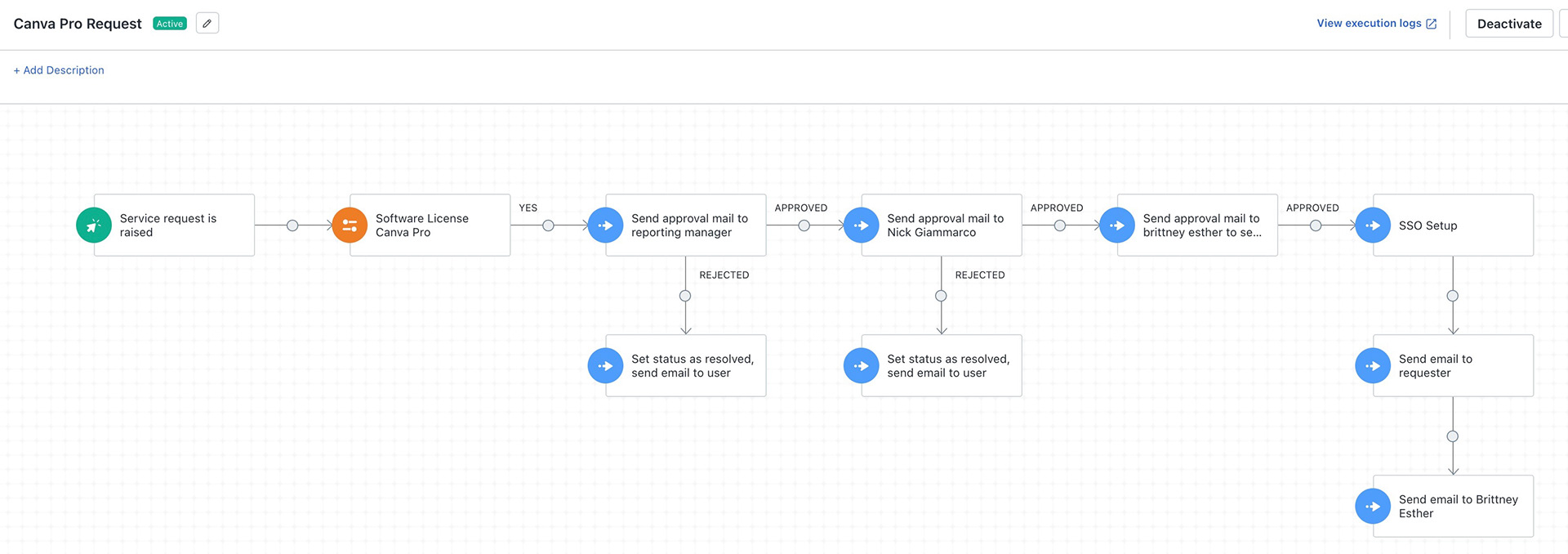
Partnered with Finance and Communications to transition all department-owned Canva Pro accounts into one institutional license managed by CIT. Negotiated with Canva’s vendor team to secure free Canva Pro accounts for all Oberlin students, expanding the tool’s accessibility campus-wide. Designed and implemented an automated ticketing flow in CIT’s service system for staff and faculty to apply for Canva Pro accounts.
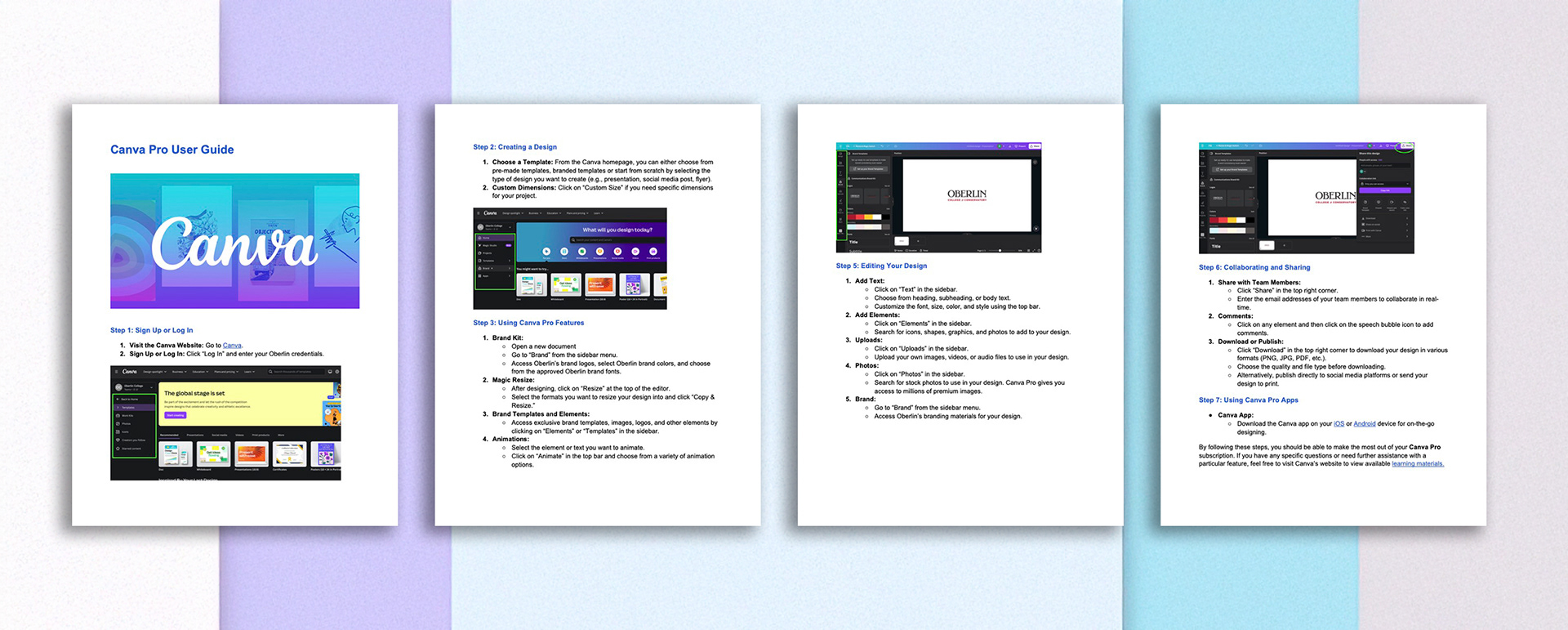
Built Oberlin’s first comprehensive training program for software licensing using Blackboard. This included: custom instructional videos, step-by-step user guides, and interactive modules for onboarding.
Led the communications campaign to launch Canva Pro for students, writing an article for the Oberlin Campus Digest and the EdTech Committee.
______________________________
Skills
UX design • instructional design • vendor negotiation • service design collaboration • process mapping • communication strategy • cross-department collaboration • technical writing.
UX design • instructional design • vendor negotiation • service design collaboration • process mapping • communication strategy • cross-department collaboration • technical writing.
Roadblocks
The roadblocks for this project included: Coordinating multiple departments’ account ownership and billing transitions, adapting to Canva’s changing enterprise licensing model, balancing administrative needs with user accessibility, and ensuring training content met diverse technical skill levels across campus.
The roadblocks for this project included: Coordinating multiple departments’ account ownership and billing transitions, adapting to Canva’s changing enterprise licensing model, balancing administrative needs with user accessibility, and ensuring training content met diverse technical skill levels across campus.
Project Assessment
Through collaborative iteration with CIT Support, Communications, and Finance, the solution evolved into a sustainable, automated system. Usability testing within Blackboard and the ticketing flow confirmed ease of access and clarity for end users.
Through collaborative iteration with CIT Support, Communications, and Finance, the solution evolved into a sustainable, automated system. Usability testing within Blackboard and the ticketing flow confirmed ease of access and clarity for end users.

Solution
A fully centralized Canva Pro management system with automated request workflows, structured training, and cost consolidation under CIT. The program also included a student access initiative, allowing all Oberlin students to create, collaborate, and design using free Canva Pro accounts.
______________________________
Impact
Reduced redundant software billing across departments, streamlined onboarding through automated ticketing and single sign-on (Okta) integration. The project also increased adoption and satisfaction among faculty, staff, and students, and extended Canva Pro’s reach to 100% of Oberlin’s student body at no additional cost.
Reduced redundant software billing across departments, streamlined onboarding through automated ticketing and single sign-on (Okta) integration. The project also increased adoption and satisfaction among faculty, staff, and students, and extended Canva Pro’s reach to 100% of Oberlin’s student body at no additional cost.
Goals Achieved
The project resulted in centralized billing under CIT, Oberlin’s first cross-department Canva training program, automated the license request and approval process, free student accounts with the vendor, and improved communication and awareness through a campus-wide rollout.
The project resulted in centralized billing under CIT, Oberlin’s first cross-department Canva training program, automated the license request and approval process, free student accounts with the vendor, and improved communication and awareness through a campus-wide rollout.
Takeaways
This project reinforced the value of service design thinking within IT environments. It involved combining UX, operations, and communication strategy to improve institutional efficiency. It also highlighted how thoughtful vendor negotiation and user-focused training can democratize access to technology and empower creativity across an academic community.
This project reinforced the value of service design thinking within IT environments. It involved combining UX, operations, and communication strategy to improve institutional efficiency. It also highlighted how thoughtful vendor negotiation and user-focused training can democratize access to technology and empower creativity across an academic community.